



How to Teach Kids to Read: Step-by-Step Guide for Parents in the UAE
- April 01, 2026
- ChildhoodEducation
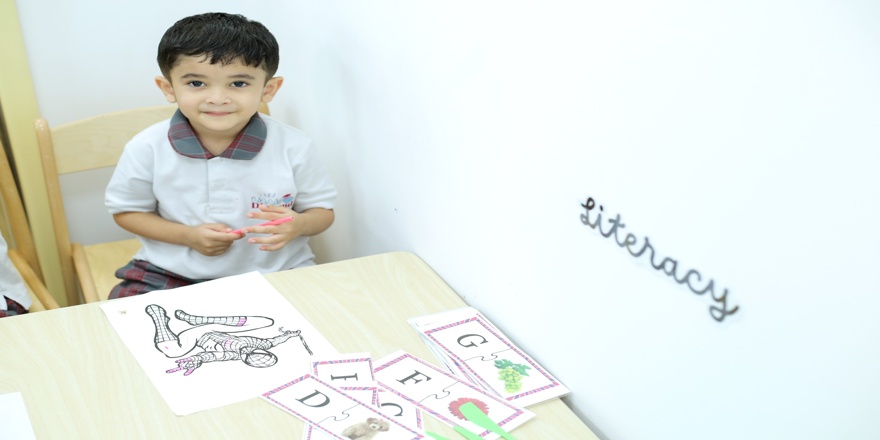
Phonics first. It's the advice plastered across every parenting blog and early childhood resource in the UAE. But here's the thing - phonics alone won't teach kids to read. It's one piece of a much larger puzzle, and treating it as the whole solution is exactly why so many parents find themselves frustrated three months in, wondering why their child still struggles with simple sentences.
Essential Steps to Teach Kids to Read
Teaching a child to read is a bit like building a house. You can't install windows before the frame exists. Each skill depends on the one before it, and rushing through foundations creates problems that show up months later. Here's the sequence that actually works.
1. Start with Letter Recognition and Sounds
Before anything else, children need to recognise letters and connect them to sounds. Not letter names - sounds. The letter 'b' makes the sound /b/, not "bee." This distinction matters more than most parents realise. I spent weeks teaching letter names before discovering my own child had no idea what sound 'c' made. A frustrating lesson.
Start with magnetic letters on the fridge. Point to them during breakfast. Make it casual. The goal is familiarity, not perfection. Focus on lowercase letters first since that's what appears most often in books.
2. Introduce Simple Phonics Patterns
Once letter sounds click, move to CVC words - that's consonant-vowel-consonant patterns like "cat," "dog," and "sun." These are the building blocks. Don't even bother with complex blends until your child can read CVC words without hesitation.
Write three-letter words on index cards. Practice them at the bus stop, in the car, waiting at the clinic. Little moments add up.
3. Build Sight Word Vocabulary
Here's where it gets interesting. Some words don't follow phonics rules. "The," "said," "was" - these common words appear constantly but can't be sounded out logically. Children need to memorise them by sight.
Create a "word wall" somewhere visible. Add five new sight words weekly. Review old ones daily. It sounds tedious. It is tedious. But it works.
4. Practice Blending Sounds Together
Knowing individual sounds means nothing if a child can't blend them. This skill often takes longer than expected. Try stretching words out like elastic bands: "c-a-t" slowly becomes "cat."
Use your finger to slide under each letter as you blend. The physical movement helps connect the visual to the auditory. Some children grasp this in days. Others need months. Both are normal.
5. Read Aloud Daily with Your Child
This matters more than any worksheet or flashcard. Full stop. Reading aloud exposes children to vocabulary and sentence structures and rhythm and story patterns all at once. Fifteen minutes at bedtime consistently beats an hour of sporadic drilling.
Let them see your finger track the words. Pause at pictures. Ask what might happen next. Make it conversation, not instruction.
6. Use Reading Worksheets for Kids
Reading worksheets for kids serve a specific purpose - they provide structured, repetitive practice that reinforces skills. But don't rely on them exclusively. Use worksheets to solidify what you've already introduced through conversation and play.
Look for worksheets that:
Focus on one skill at a time
Include pictures for context clues
Progress logically in difficulty
Feel achievable, not overwhelming
7. Create Word Games and Activities
Learning disguised as play works better than obvious instruction. Make letter hunts around the house. Play "I Spy" with beginning sounds. Build words from playdough. The moment reading feels like homework, engagement drops.
How to Improve Child's Reading Skills Through Practice?
So you've covered the basics. Your child can decode simple words. Now what? The real question becomes how to improve child's reading skills once the foundations exist. Practice is the answer, but the right kind of practice.
Establish a Daily Reading Routine
Consistency beats intensity every time. Ten minutes daily outperforms an hour once weekly. Pick a time that works - after breakfast, before bed, during the afternoon lull - and protect it.
The routine itself creates momentum. Children begin expecting it. Eventually, they start asking for it.
Choose Age-Appropriate Books
This is where parents often go wrong. A book that's too difficult creates frustration and resistance. The sweet spot? Your child should be able to read about 90% of words without help. Any harder and they're decoding, not reading. Any easier and they're not growing.
Ask Comprehension Questions
Decoding words isn't the same as understanding stories. Ask simple questions during and after reading:
What happened first?
Why did the character feel sad?
What do you think happens next?
These questions build comprehension skills that will matter far more than decoding in the long run.
Use Bilingual Resources for Arabic-Speaking Families
Many UAE families juggle Arabic and English. This isn't a disadvantage - it's an opportunity. Research shows bilingual children develop stronger overall literacy skills. Use books with dual-language editions. Discuss stories in both languages. The concepts transfer.
Track Progress with Reading Milestones
Keep a simple log. Note which books were read, which words caused trouble, which skills improved. This record helps identify patterns and prevents repeating the same material unnecessarily.
Common Reading Challenges and Solutions
Every child hits walls. The single most frustrating part of teaching reading is watching a child who was progressing suddenly seem to forget everything. It happens. Here's how to handle common obstacles.
When Your Child Struggles with Letter Sounds
Go back to basics without making it feel like punishment. Use multisensory approaches - trace letters in sand, form them with clay, sing letter-sound songs. Sometimes the auditory pathway needs support from tactile learning.
Dealing with Reading Resistance
Resistance usually signals frustration or boredom. Check the book difficulty. Make sessions shorter. Add more choice - let them pick between two books rather than assigning one. Sometimes stepping back for a week helps more than pushing forward.
Supporting Multilingual Learners
Children learning to read in multiple languages simultaneously face unique challenges. Arabic reads right-to-left. English reads left-to-right. This isn't confusing for young brains - they adapt remarkably well - but it does require patience and clear separation during practice sessions.
Recognising Reading Difficulties Early
Some struggles indicate normal development. Others might suggest learning differences like dyslexia. Warning signs include:
Persistent letter reversals beyond age 7
Difficulty rhyming words
Strong vocabulary but weak decoding
Extreme fatigue after short reading sessions
If concerns persist, consult a specialist. Early intervention makes a significant difference.
Making Reading Success Achievable
Teaching kids to read doesn't require expensive programmes or professional credentials. It requires consistency and patience and realistic expectations and the willingness to adapt when something isn't working. Most parents can teach kids to read effectively at home with the right approach.
Start where your child is, not where you think they should be. Celebrate small wins. Accept that progress isn't linear. Some weeks will feel like breakthroughs. Others will feel like setbacks. Both are part of the process.
Frequently Asked Questions
Ques: What age should I start teaching my child to read?
Ans: Most children are ready for formal reading instruction between ages 4 and 6. Earlier exposure to books, letters, and sounds builds foundations, but pushing structured lessons before a child shows interest often backfires.
Ques: How long should daily reading sessions be?
Ans: For children under 5, aim for 10-15 minutes. Ages 5-7 can handle 15-20 minutes. The key is stopping before frustration sets in - ending on a positive note maintains enthusiasm.
Ques:Should I teach reading in English or Arabic first?
Ans: Either works. The stronger your own skills in a language, the more effectively you can teach it. Many UAE families start with the language used most at home, then introduce the second language once basic concepts are established.
Ques: What are the best reading worksheets for kids in the UAE?
Ans: Look for worksheets aligned with your child's current level. Many UAE bookshops stock Oxford Reading Tree and Jolly Phonics resources. Online platforms offer printable options for various skill levels. Quality matters more than quantity.
Ques: How can I teach kids to read if English isn't my first language?
Ans: Audiobooks and phonics apps can support pronunciation. Focus on what you can do well - building routines, providing materials, celebrating progress. Your involvement matters more than perfect accent or fluency.