



Top Circle Time Activities for Toddlers, Nursery and Kindergarten
- January 08, 2026
- Nursery In Dubai
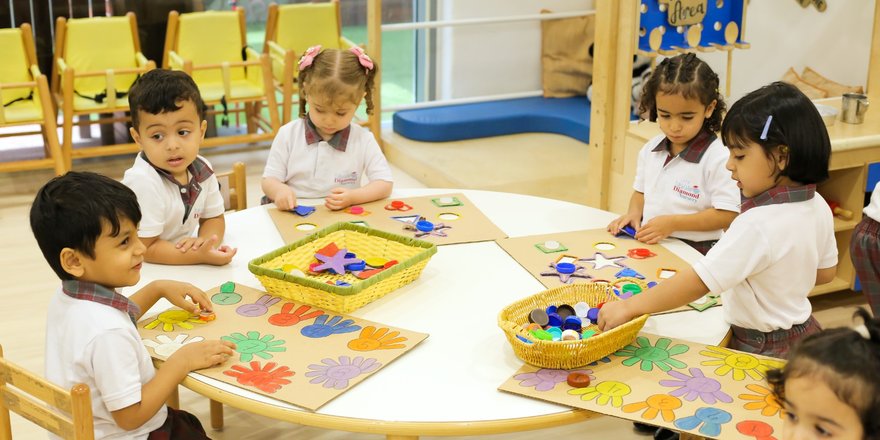
Circle time activities for young children have long been hailed as the cornerstone of early childhood education. The assumption? Gather children in a circle, sing a song, and learning happens automatically. That assumption is only half right. Without the right activities matched to developmental stages, circle time becomes little more than supervised sitting. Getting this wrong means missing one of the most powerful windows for social and cognitive development.
I've spent years refining circle time ideas for preschool settings, and the single biggest lesson is this: age-appropriate engagement trumps everything else. A brilliant activity for a four-year-old can utterly derail a group of toddlers. So let's break down what actually works.
Top Circle Time Activities for Different Age Groups
Circle Time Activities for Toddlers (18-36 months)
Toddlers operate on a different wavelength entirely. Their attention spans are measured in minutes, not quarter-hours. The most effective circle time activities for toddlers rely on repetition, sensory input, and movement.
Peek-a-boo variations - Use a large colourful scarf to play peek-a-boo with the whole group. Simple? Yes. Effective? Absolutely.
Texture passing - Pass around objects with distinct textures (smooth, bumpy, soft). Name each one as it travels the circle.
Simple fingerplays - "Itsy Bitsy Spider" and "Pat-a-Cake" work brilliantly because the movements are built into the words.
Name recognition songs - Sing each child's name during a hello song. Watch their faces light up.
The key with this age group is brevity. Five to ten minutes is plenty. Anything longer and you'll lose them.
Circle Time Activities for Nursery (3-4 years)
Circle time activities for nursery children can stretch longer and involve more complex interactions. At this stage, children begin to understand turn-taking and can follow multi-step instructions.
Show and tell - Keep it structured. One object, two sentences about it, then pass to the next child.
Weather wheel discussions - Have a child spin the wheel and describe what they see outside.
Emotion matching games - Hold up cards showing different facial expressions. Ask children to make the same face.
Simple story sequencing - Use three picture cards to retell a familiar story in order.
Nursery-age children crave predictability. Start and end circle time the same way each day. That routine becomes their anchor.
Circle Time Activities for Kindergarten (4-6 years)
Circle time activities for kindergarten can incorporate more sophisticated skills. These children are ready for genuine discussion, problem-solving, and collaborative decision-making.
Question of the day - Pose an open-ended question and let each child share their answer.
Group storytelling - Start a story and have each child add one sentence.
Calendar maths - Count the days, identify patterns, predict what comes next.
Voting activities - Let children vote on a simple choice and tally the results together.
What drives me crazy is seeing kindergarten circles run exactly like toddler circles. These children are capable of so much more. Challenge them.
Transition Activities Between Age Groups
Mixed-age settings require flexibility. The trick is layering activities so younger children can participate at a basic level while older ones engage more deeply.
Think of it like a swimming pool with a shallow end and a deep end. A song like "Head, Shoulders, Knees and Toes" works because toddlers can simply touch their heads while older children race to complete the full sequence quickly. Everyone participates. Nobody feels left out or bored.
Essential Circle Time Games and Movement Activities
Musical Games for Group Participation
Music is the universal engagement tool. Circle time games involving music capture attention faster than almost anything else.
Freeze dance - Play music and freeze when it stops. Vary the tempo to keep it interesting.
Musical instruments pass - Pass shakers or drums around while singing, then stop suddenly.
Echo clapping - Clap a rhythm and have children repeat it back.
The real change happens in the room's energy. You stop hearing shuffling feet and start hearing laughter and focused participation.
Action Songs with Simple Movements
Action songs bridge the gap between sitting still (which is hard for young children) and total chaos (which defeats the purpose). "If You're Happy and You Know It" and "The Wheels on the Bus" remain classics for good reason. They work.
Add variations to keep things fresh. Change "bus" to "plane" and create new movements. Children love contributing ideas.
Interactive Counting and Number Games
"Five Little Monkeys" is more than entertainment. It's early maths. Children learn subtraction through story, which is infinitely more memorable than worksheets.
Try counting children in the circle. "How many are wearing blue today?" Suddenly, maths is personal and relevant.
Sensory and Texture Exploration Activities
Pass a mystery bag around the circle. Each child reaches in (without looking) and describes what they feel. Is it smooth? Rough? Squishy? This builds vocabulary and observation skills simultaneously.
Cooperative Play Activities
Parachute games are the gold standard here. Lifting a parachute together, bouncing balls on it, or hiding underneath creates instant cooperation. But honestly, the only one that really matters is learning to work together. Everything else is secondary.
Creative Circle Time Ideas for Daily Themes and Learning Goals
Weather and Season Activities
A daily weather check might seem routine. That's the point. Routine builds vocabulary through repetition.
Use weather cards and let a child be the "weather reporter"
Dress a paper doll appropriately for the day's weather
Sing season-specific songs and discuss changes observed outside
Alphabet and Phonics Games
Circle time is perfect for what educators call PCK - Pedagogical Content Knowledge - which is basically the art of making abstract concepts (like letter sounds) concrete and engaging.
Try "I Spy" with beginning sounds. "I spy something that starts with 'buh'." Children look around the room and guess. Learning happens without anyone realising they're learning.
Social Skills Building Activities
Role-playing scenarios during circle time teaches social skills in context. "What do we do if someone takes our toy?" Discuss options, practise responses, and celebrate good solutions.
Use puppets for shy children. Sometimes it's easier to speak through a character than to speak as yourself.
Story Time Extensions and Props
Don't just read stories. Extend them. After reading "The Very Hungry Caterpillar," pass around plastic fruits and have children sequence what the caterpillar ate. Stories become interactive experiences.
Making Circle Time Meaningful and Engaging
The single most frustrating part of circle time planning is overthinking it. I've wasted hours crafting elaborate activities only to watch a simple bouncing ball hold attention for twice as long.
Here's what actually matters:
Predictable structure: Children feel secure and know what's coming.
Variety within structure: Same format, different content keeps interest.
Child involvement: Being chosen as a helper increases engagement.
Movement breaks: Bodies need to move; build it in or lose them.
Watch the children. They'll tell you what works. That fidgeting child at the back? They need more movement. The child who won't participate? They might need a special role. Flexibility isn't weakness. It's responsiveness.
If you’re searching for a nursery where circle time isn’t just routine but a meaningful learning experience, Little Diamond Nursery in Dubai is a wonderful choice. With highly skilled educators, engaging activities, and a nurturing environment, the nursery focuses on building confidence, social skills, and curiosity in every child.
Frequently Asked Questions
Ques: How long should circle time last for toddlers versus kindergarten children?
Ans: Toddlers manage 5-10 minutes comfortably. Nursery children can handle 10-15 minutes. Kindergarten children can engage for 15-20 minutes, sometimes longer if activities are varied. Watch for signs of restlessness and be willing to end early.
Ques: What are the best circle time activities for shy or reluctant participants?
Ans: Puppets and props give shy children something to hide behind while still participating. Pair activities (sharing with one neighbour) feel less intimidating than whole-group responses. Never force participation. Sometimes watching is learning too.
Ques: How many children should ideally participate in circle time activities?
Ans: Groups of 8-12 children work best for most activities. Larger groups require more adult support and simpler activities. Smaller groups allow for deeper engagement and more turns per child.
Ques: Which circle time games work best for mixed age groups?
Ans: Layered activities where everyone can participate at their own level work brilliantly. Action songs, parachute games, and simple passing games allow toddlers to join in basically while older children take on more complex roles.
Ques: How can I adapt circle time activities for children with special needs?
Ans: Provide visual schedules showing what happens during circle time. Offer sensory supports like fidget toys or weighted lap pads. Allow alternative participation methods. If a child needs to stand rather than sit, let them. The goal is engagement, not conformity.