




FS1 British Curriculum Checklist: What Every Parent in UAE Should Know

FS1 British Curriculum Checklist: What Every Parent in UAE Should Know Conventional wisdom says parents should leave early education entirely to the professionals. It’s their job, after all. But here’s the thing – that advice creates passive observers when what children actually need are engaged partners. The FS1 British curriculum isn’t a mystery box. Its basically a carefully structured framework that parents can understand and actively support. This checklist breaks down exactly what happens in Foundation Stage 1, what milestones matter, and how to genuinely contribute to a child’s educational journey in the UAE. Essential FS1 Learning Areas Every Parent Must Monitor Prime Areas of Development The early years foundation stage builds on three prime areas that form the bedrock of all future learning. Think of these as the foundation of a house – get them wrong and everything built on top becomes unstable. These prime areas are communication and language, physical development, and personal, social and emotional development. Schools prioritise these because young brains are literally wiring themselves during this period. Communication and Language Milestones By the end of FS1, children should demonstrate listening skills, follow simple instructions, and express themselves using expanding vocabulary. The single most frustrating part of tracking this area? Parents often compare their child’s speaking ability to older siblings or cousins. That’s not how it works. Look instead for whether a child can hold a short conversation about something that interests them and understands questions like “where” and “why”. Physical Development Benchmarks Gross motor skills like running and jumping matter, yes. But honestly, the only milestone that really matters at this stage is fine motor control – can the child hold a pencil correctly and use scissors safely? Everything else is secondary. Schools assess whether children can manage their own coats and show control in large and small movements. Personal, Social and Emotional Goals Can a three-year-old separate from caregivers without excessive distress? Can they share a toy (occasionally, at least)? These PSED goals – that’s Personal, Social and Emotional Development – track how children manage feelings and build relationships. This area predicts long-term school success more reliably than early reading ability. Specific Learning Areas Overview Beyond the prime areas sit four specific learning areas: literacy, mathematics, understanding the world, and expressive arts and design. The FS1 curriculum overview introduces these gradually, weaving them through play-based activities rather than formal instruction. Literacy Activities FS1 literacy activities focus on phonemic awareness – recognising sounds within words. Children learn to hear rhymes, identify initial sounds, and develop mark-making skills that precede handwriting. Schools use stories, songs, and environmental print to build these foundations. Don’t panic if writing looks like scribbles. It should. Numeracy Skills Development FS1 numeracy skills centre on number recognition to 10, one-to-one counting, and understanding concepts like “more than” and “fewer”. Children explore shapes, patterns, and spatial language through building blocks and sorting activities. The goal isn’t calculation. It’s mathematical thinking. Understanding the World Components This area covers people and communities, the world around us, and technology. In UAE British schools, children explore local environments, cultural celebrations, and simple cause-and-effect relationships. They learn to ask questions about how things work. FS1 Learning Objectives and Assessment Framework Term-by-Term Learning Objectives FS1 learning objectives progress across three terms, building complexity gradually. Term one focuses on settling, routines, and initial assessments. Term two introduces more structured learning expectations. Term three prepares children for transition to FS2. Schools share these objectives through parent workshops and written communications. Observation-Based Assessment Methods Assessment in early years looks nothing like tests. Teachers observe children during play, photograph learning moments, and record significant achievements. These observations feed into learning journals that parents can access. The real change becomes visible when flipping through these journals – photographs of a child stacking three blocks in September versus building elaborate towers by March. Progress Tracking Systems Most UAE British schools use digital platforms to share progress updates. Parents receive notifications about achievements and areas for development. But what does this actually mean for daily life? It means checking the app becomes as routine as checking emails. Parent Partnership Requirements The early years foundation stage mandates parent involvement. Schools expect attendance at parent consultations, engagement with home learning suggestions, and communication about home experiences that might affect school performance. This isn’t optional box-ticking. It’s essential. Supporting Your Child’s FS1 Journey at Home Daily Routine Recommendations Time of Day Activity Focus Morning Self-care routines (dressing, teeth brushing) Afternoon Outdoor play and physical activity Evening Story time and conversation about the day Consistency matters more than perfection. Establish predictable rhythms that children can anticipate. Home Learning Environment Setup Create a designated space with accessible art supplies, books at child height, and open-ended toys like blocks and playdough. Don’t bother with expensive educational gadgets – most gather dust within weeks. Focus instead on real-world materials: cardboard boxes, measuring cups, natural objects collected on walks. Screen Time Guidelines UAE health authorities recommend limiting screen time for under-fives. For FS1 children, this means maximum one hour daily of high-quality content, ideally co-viewed with an adult. Sounds simple, right? In practice, this requires planning alternative activities and managing expectations. Parent-Teacher Communication Strategies Use school communication apps for quick updates. Save detailed discussions for scheduled meetings. Document concerns with specific examples and dates rather than vague worries. Ask teachers what they’re focusing on this term and how home activities can reinforce those goals. Empowering Your Child’s Early Years Foundation Stage Success The FS1 British curriculum provides a robust framework, but frameworks need humans to bring them alive. Parents who understand what’s being taught and why become genuine partners in education rather than anxious bystanders. Monitor the prime areas closely. Engage with school communications actively. Create a home environment that extends learning naturally. Most importantly, remember that three-year-olds learn through play and relationships and exploration and making glorious messes. That’s not a deviation from education. It’s education itself. Why Choose Little Diamond Nursery for FS1? At Little Diamond Nursery, our FS1 programme follows
Top Circle Time Activities for Toddlers, Nursery and Kindergarten
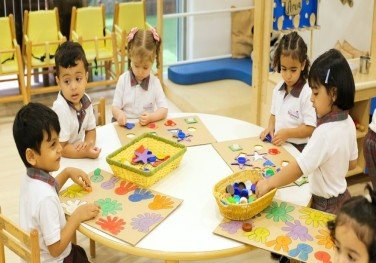
Circle time activities for young children have long been hailed as the cornerstone of early childhood education. The assumption? Gather children in a circle, sing a song, and learning happens automatically. That assumption is only half right. Without the right activities matched to developmental stages, circle time becomes little more than supervised sitting. Getting this wrong means missing one of the most powerful windows for social and cognitive development. I’ve spent years refining circle time ideas for preschool settings, and the single biggest lesson is this: age-appropriate engagement trumps everything else. A brilliant activity for a four-year-old can utterly derail a group of toddlers. So let’s break down what actually works. Top Circle Time Activities for Different Age Groups Circle Time Activities for Toddlers (18-36 months) Toddlers operate on a different wavelength entirely. Their attention spans are measured in minutes, not quarter-hours. The most effective circle time activities for toddlers rely on repetition, sensory input, and movement. The key with this age group is brevity. Five to ten minutes is plenty. Anything longer and you’ll lose them. Circle Time Activities for Nursery (3-4 years) Circle time activities for nursery children can stretch longer and involve more complex interactions. At this stage, children begin to understand turn-taking and can follow multi-step instructions. Nursery-age children crave predictability. Start and end circle time the same way each day. That routine becomes their anchor. Circle Time Activities for Kindergarten (4-6 years) Circle time activities for kindergarten can incorporate more sophisticated skills. These children are ready for genuine discussion, problem-solving, and collaborative decision-making. What drives me crazy is seeing kindergarten circles run exactly like toddler circles. These children are capable of so much more. Challenge them. Transition Activities Between Age Groups Mixed-age settings require flexibility. The trick is layering activities so younger children can participate at a basic level while older ones engage more deeply. Think of it like a swimming pool with a shallow end and a deep end. A song like “Head, Shoulders, Knees and Toes” works because toddlers can simply touch their heads while older children race to complete the full sequence quickly. Everyone participates. Nobody feels left out or bored. Essential Circle Time Games and Movement Activities Musical Games for Group Participation Music is the universal engagement tool. Circle time games involving music capture attention faster than almost anything else. The real change happens in the room’s energy. You stop hearing shuffling feet and start hearing laughter and focused participation. Action Songs with Simple Movements Action songs bridge the gap between sitting still (which is hard for young children) and total chaos (which defeats the purpose). “If You’re Happy and You Know It” and “The Wheels on the Bus” remain classics for good reason. They work. Add variations to keep things fresh. Change “bus” to “plane” and create new movements. Children love contributing ideas. Interactive Counting and Number Games “Five Little Monkeys” is more than entertainment. It’s early maths. Children learn subtraction through story, which is infinitely more memorable than worksheets. Try counting children in the circle. “How many are wearing blue today?” Suddenly, maths is personal and relevant. Sensory and Texture Exploration Activities Pass a mystery bag around the circle. Each child reaches in (without looking) and describes what they feel. Is it smooth? Rough? Squishy? This builds vocabulary and observation skills simultaneously. Cooperative Play Activities Parachute games are the gold standard here. Lifting a parachute together, bouncing balls on it, or hiding underneath creates instant cooperation. But honestly, the only one that really matters is learning to work together. Everything else is secondary. Creative Circle Time Ideas for Daily Themes and Learning Goals Weather and Season Activities A daily weather check might seem routine. That’s the point. Routine builds vocabulary through repetition. Alphabet and Phonics Games Circle time is perfect for what educators call PCK – Pedagogical Content Knowledge – which is basically the art of making abstract concepts (like letter sounds) concrete and engaging. Try “I Spy” with beginning sounds. “I spy something that starts with ‘buh’.” Children look around the room and guess. Learning happens without anyone realising they’re learning. Social Skills Building Activities Role-playing scenarios during circle time teaches social skills in context. “What do we do if someone takes our toy?” Discuss options, practise responses, and celebrate good solutions. Use puppets for shy children. Sometimes it’s easier to speak through a character than to speak as yourself. Story Time Extensions and Props Don’t just read stories. Extend them. After reading “The Very Hungry Caterpillar,” pass around plastic fruits and have children sequence what the caterpillar ate. Stories become interactive experiences. Making Circle Time Meaningful and Engaging The single most frustrating part of circle time planning is overthinking it. I’ve wasted hours crafting elaborate activities only to watch a simple bouncing ball hold attention for twice as long. Here’s what actually matters: Watch the children. They’ll tell you what works. That fidgeting child at the back? They need more movement. The child who won’t participate? They might need a special role. Flexibility isn’t weakness. It’s responsiveness. If you’re searching for a nursery where circle time isn’t just routine but a meaningful learning experience, Little Diamond Nursery in Dubai is a wonderful choice. With highly skilled educators, engaging activities, and a nurturing environment, the nursery focuses on building confidence, social skills, and curiosity in every child. Frequently Asked Questions Ques: How long should circle time last for toddlers versus kindergarten children? Ans: Toddlers manage 5-10 minutes comfortably. Nursery children can handle 10-15 minutes. Kindergarten children can engage for 15-20 minutes, sometimes longer if activities are varied. Watch for signs of restlessness and be willing to end early. Ques: What are the best circle time activities for shy or reluctant participants? Ans: Puppets and props give shy children something to hide behind while still participating. Pair activities (sharing with one neighbour) feel less intimidating than whole-group responses. Never force participation. Sometimes watching is learning too. Ques: How many children should ideally participate in circle time activities? Ans:
How to Deal with Picky Eaters: A Step-by-Step Parent’s Guide

The advice to simply “wait it out” when dealing with picky eaters has been passed around parenting circles for decades. It sounds reasonable enough. But here’s the thing. It’s basically incomplete advice that leaves parents feeling helpless at dinner tables across the country. Real progress with fussy eaters comes from understanding why they reject foods and having a practical toolkit to work with. Understanding Your Fussy Eater Common Reasons Behind Picky Eating Before diving into solutions, it helps to understand what’s actually happening. Children aren’t refusing broccoli just to wind you up (though it can certainly feel that way). There’s usually something driving the behaviour. Sensory sensitivities top the list. Some kids genuinely find certain textures overwhelming. The sliminess of a cooked mushroom or the graininess of certain fruits can trigger a visceral response. Then there’s neophobia. That’s the fear of new foods, and it’s a completely normal developmental phase. From an evolutionary standpoint, it made sense for early humans to be suspicious of unfamiliar plants and foods. Your child’s brain is essentially running ancient survival software. Age-Specific Patterns in Toddlers Picky eater toddlers between 18 months and 3 years often experience a peak in food refusal. This coincides with their growing independence and desire for control. They’re discovering they can say no. Food becomes one arena where they exercise that new power. The pattern tends to shift slightly as children grow. Fussy eaters aged 4 to 6 often have more established preferences and stronger opinions about presentation. A banana that’s “too spotty” can trigger complete rejection. Sounds familiar, right? When to Worry About Selective Eating? Most picky eating falls within normal bounds. But there are signals that warrant professional attention. Watch for weight loss or failure to gain weight appropriately. Notice if your child’s acceptable foods are dropping below 15 to 20 items. Extreme distress around mealtimes or gagging at the sight of certain foods can indicate something beyond typical pickiness. Step-by-Step Strategies for Managing Picky Eaters Honestly, the only strategy that really matters is consistency. Don’t even bother with fancy recipes or elaborate presentations until you’ve nailed a consistent approach. The other strategies support this foundation. 1. Create a Predictable Meal Schedule Structure is your friend here. Three meals and two snacks at roughly the same times each day helps regulate appetite. When children know food is coming at predictable intervals, they’re less likely to fill up on random snacks and more likely to arrive at meals genuinely hungry. 2. Introduce New Foods Alongside Familiar Favourites This one took me ages to figure out properly. I kept serving entirely new meals hoping for breakthrough moments. The breakthrough never came. What works is putting one unfamiliar item on a plate filled mostly with accepted foods. The pressure drops immediately. 3. Make Mealtimes Pressure-Free There’s nothing more counterproductive than turning dinner into a battleground. Comments like “just try one bite” or “you won’t get pudding unless you eat your vegetables” create negative associations with food that can persist for years. Keep meals calm. Chat about the day. Let your child see food as fuel and enjoyment, not as a test to pass. 4. Involve Children in Food Preparation Here’s where things get interesting. Children who help prepare food are significantly more likely to taste it. Let them wash vegetables, stir ingredients, or choose between two options at the supermarket. The sensory experience of handling raw ingredients can build familiarity before food ever reaches the plate. It’s exposure without the pressure of eating. 5. Use the One-Bite Rule This approach works for some families but needs careful implementation. The idea is asking children to try just one bite of a new food, with no pressure to eat more. But if your child shows genuine distress, forcing even one bite can backfire badly. 6. Model Positive Eating Behaviours Children watch everything. They notice when parents skip vegetables or grimace at certain foods. Eating a varied diet yourself and expressing genuine enjoyment teaches more than any instruction ever could. Practical Meal Planning for Picky Eater Kids Weekly Menu Ideas for Fussy Eaters Monday: Pasta with mild tomato sauce and hidden vegetables Tuesday: Chicken strips with sweet potato wedges Wednesday: Mild fish fingers with mashed potato Thursday: Rice with vegetables and mild curry sauce Friday: Homemade pizza with customisable toppings Sneaky Ways to Add Nutrition Sometimes you need to work around the resistance rather than through it. Blended vegetables disappear into pasta sauces and soups. Cauliflower mashes beautifully into potatoes. Spinach vanishes in fruit smoothies. These aren’t long-term solutions for expanding palates, but they’re useful for ensuring nutrition while you work on acceptance. Foods Most Picky Eaters Accept Creating Food Bridges This technique is a game-changer. Food bridging uses accepted foods to introduce similar ones. If your child eats chicken nuggets, try homemade baked chicken pieces. From there, move to grilled chicken. Same concept, different presentations. It builds familiarity gradually. Moving Forward with Your Picky Eater Progress with picky eaters kids happens in small increments. Celebrate when your child touches a new food or allows it on their plate. These micro-victories matter. The sound of a child saying “I don’t like it” after actually trying something is genuinely a win. That’s engagement with food, even if the verdict is negative. Patience remains essential. Stick with your strategies, adjust what isn’t working, and remember that most children expand their palates naturally over time with consistent, gentle exposure. Looking for a nurturing place that promotes healthy eating, positive routines, and overall development? Little Diamond Nursery in Dubai offers a caring environment, experienced educators, and a play-based approach to help children grow with confidence and independence. Frequently Asked Questions Ques: How long does the picky eating phase typically last? Ans: For most children, intense food selectivity peaks between ages 2 and 6, then gradually improves. Some children remain selective eaters into late childhood, but severe restriction usually eases with age and consistent positive exposure. Ques: Should I make separate meals for my picky eater toddler? Ans: